Nobody asks what comes next – because the queue says so
A morning meeting is often just a way to work out the order. When everyone has their own queue in the order that matters, the meeting turns into decisions.
Many teams start the day by asking the same thing in different words: what matters most, who does what, what is late. The answer exists – it is just scattered across task lists, threads and leadership's memory.
An order nobody has to agree on
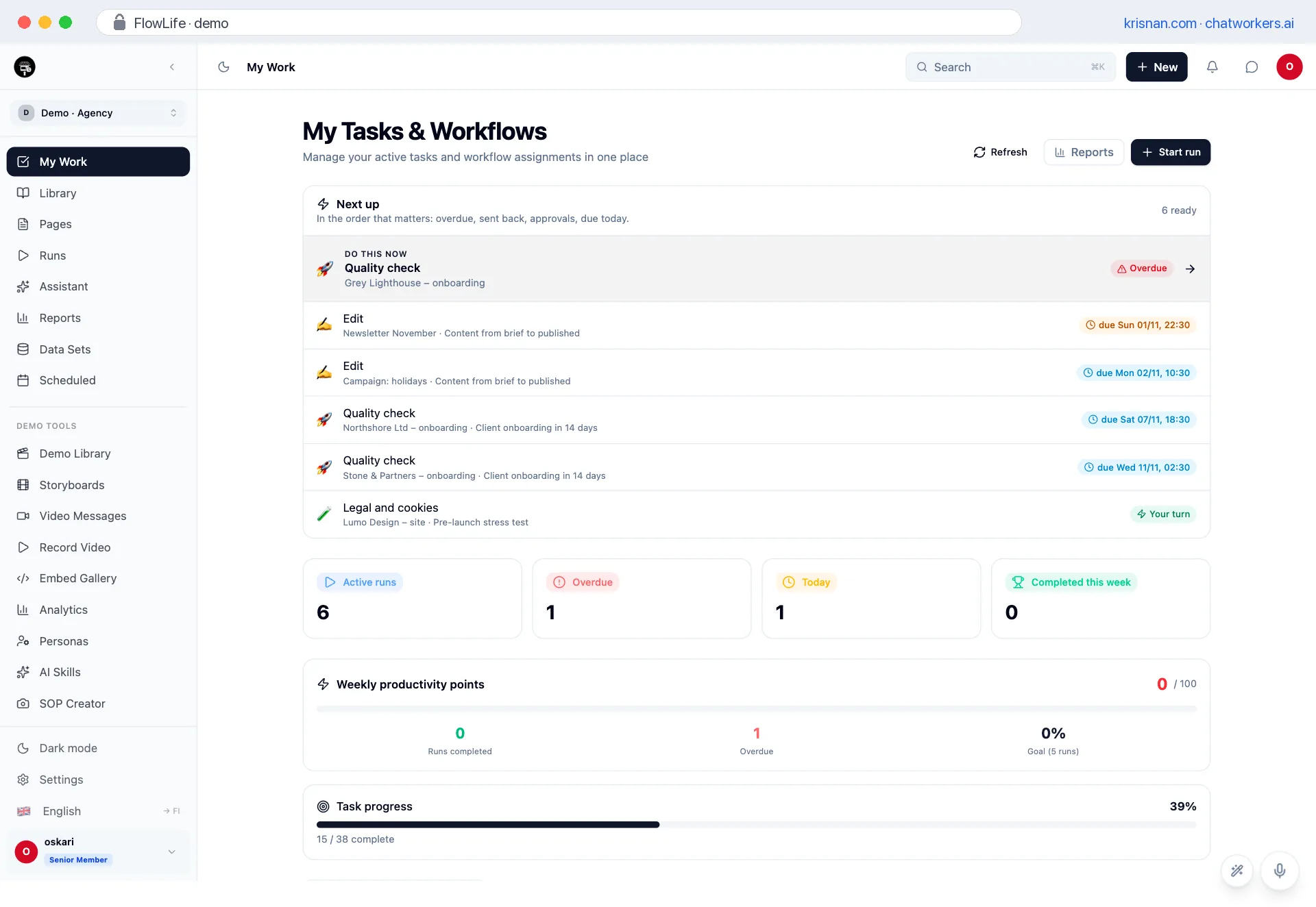
The next-up queue gathers everyone's open tasks from every run and orders them by the same rule: overdue first, then work sent back for fixing, approvals waiting and items due today. On top there is always one thing: "Do this now".
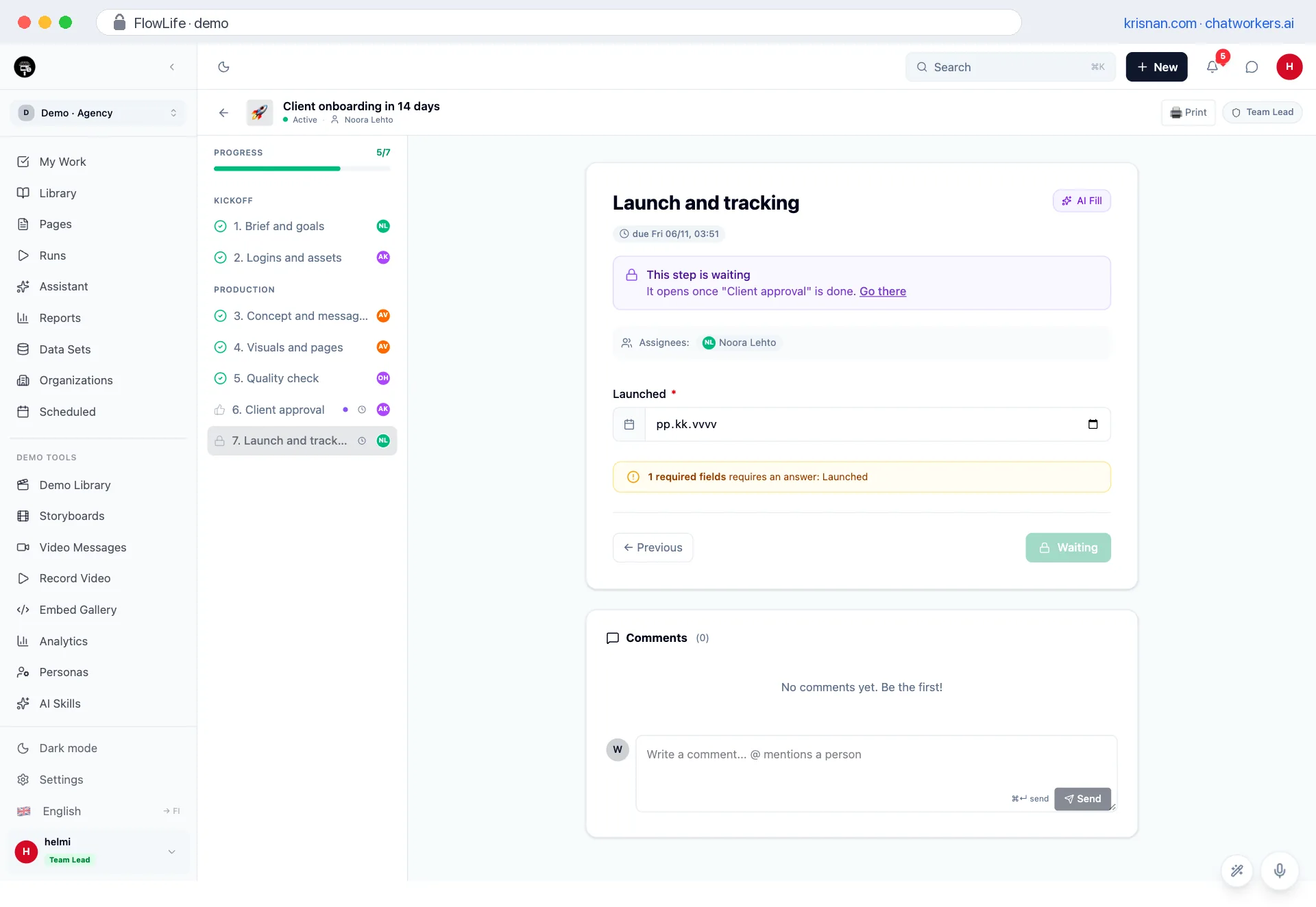
Tasks waiting behind a stop are shown separately. They cannot be done yet, so they take no attention – but everyone sees what they are waiting for.
Leadership sees the load without a meeting
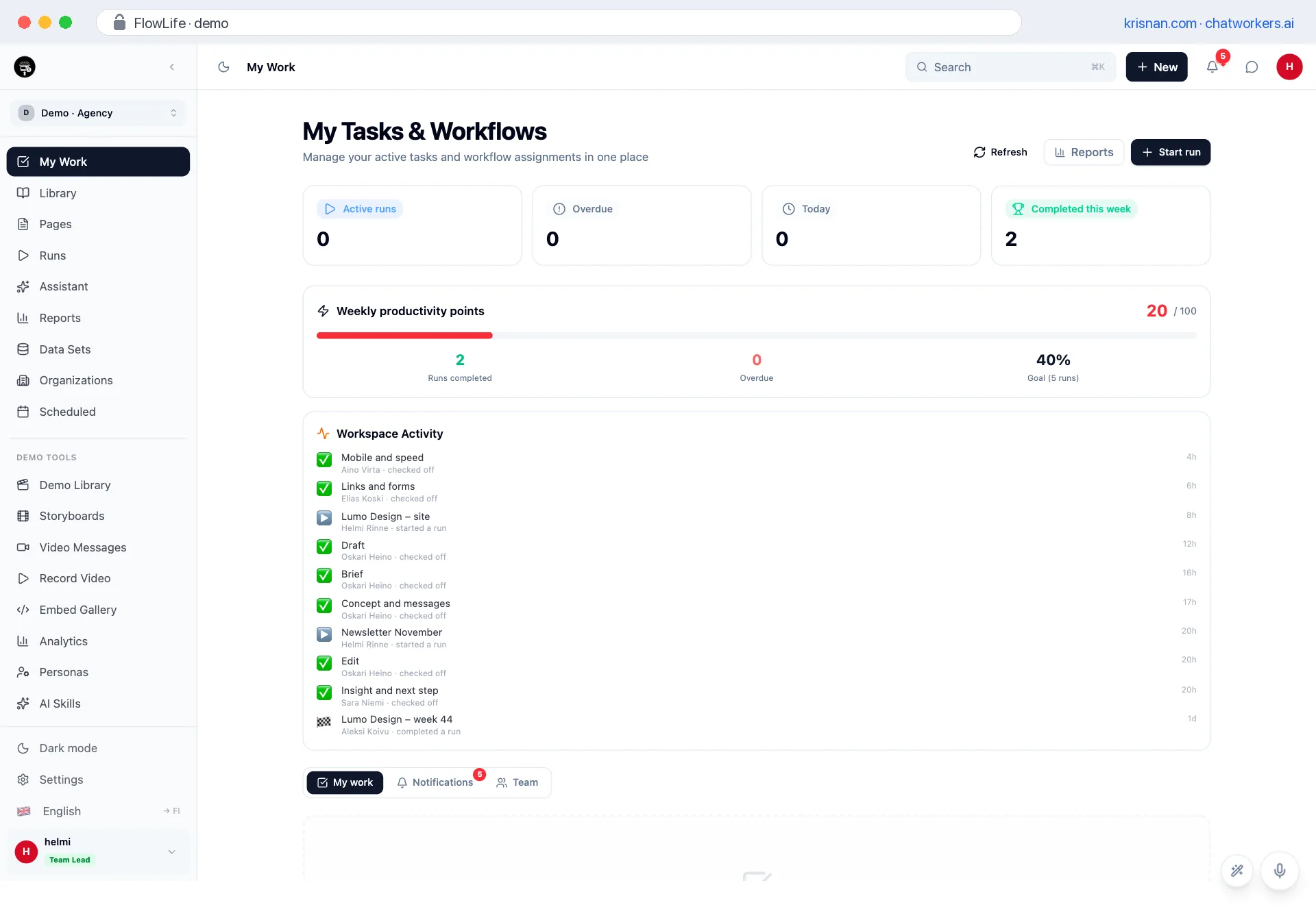
The who-has-what view shows open, overdue and done this week, person by person. When someone has too much, new work can go automatically to the least busy person – across the team or within a department.
Calculate below how much time working out the order takes now. The numbers are yours.